A composite synthesis of what real long-term dialysis patients describe carrying to every session — drawn from r/dialysis “what’s in your bag” threads, KidneyTalk Q&A, and consistent feedback. The 12 items most patients describe as essential, plus the 5 items that get suggested often but rarely earn their place.
The 12 items that keep appearing
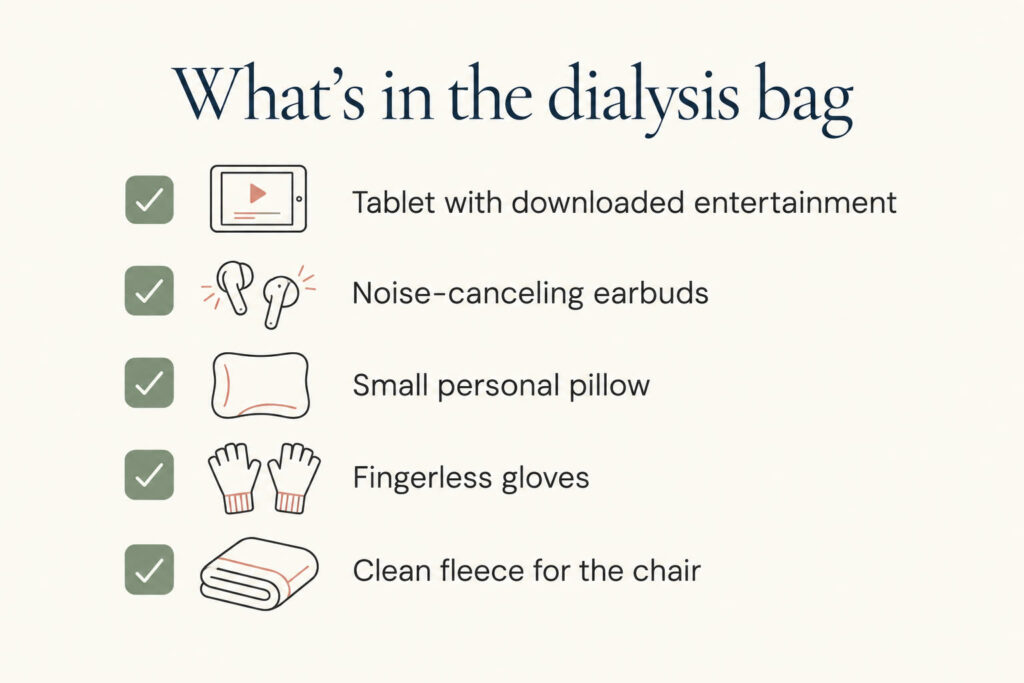
Tablet or phone with pre-downloaded entertainment
Clinic Wi-Fi is unreliable. Download what you’ll watch, read, listen to before leaving home. Tablets work better than phones for shows; Kindles work for reading.
Noise-canceling earbuds
Clinic noise is constant — alarms, conversation, machine sounds. Noise-cancel earbuds let you focus on entertainment or sleep. Brands recommended: AirPods Pro, Sony WF-1000XM, Bose QC Earbuds. Cost: $100-280.
Small personal pillow
Clinic pillows are inconsistent. A small pillow that lives in the bag gives you a known quantity. Neck pillow, lumbar pillow, or just a small soft cushion.
Fingerless gloves
Hands get cold; phone needs fingertip access. Fingerless gloves solve both. Knit or fleece, $15-25.
Renal-friendly snacks
Per renal-dietitian guidance, low-K low-P snacks. Common picks: apples, hard-boiled eggs (per dietitian), unsalted pretzels, low-sodium rice cakes, specific renal-friendly bars (Kate Farms, Procel, etc.). Skip: bananas (high K), chocolate (high P), salty snacks (sodium).
Small water bottle (within fluid limits)
Most patients are on fluid restriction (typically 32-48 oz/day). A 12-16 oz bottle for the session keeps you within limits. Track total intake during sessions.
A clean fleece for the chair
The chair-only fleece (separate from the commute fleece). Stays in the bag, comes out for the session.
Lip balm and hand cream
Dialysis dehydrates skin. Aquaphor, Vaseline, Vanicream — fragrance-free options. Cost: $5-15.
Printed medication list
For the nurse, for hospital visits if needed. Updated quarterly. Include doses and prescribing physician.
Prescription glasses (or readers)
Reading on a tablet for 4 hours requires the right vision setup. Bring your reading glasses if you don’t wear them daily.
Phone charger with a long cable
Outlets are far from chairs in most clinics. 6-foot or 10-foot cable. Many patients carry both Lightning and USB-C in one Anker / Belkin multi-charger.
Zippered pouch for personal items
Wallet, keys, ID, insurance card — all in one place. A toiletry bag or small zippered pouch keeps small items findable in the larger bag.
The 5 things that get suggested but rarely earn their place
The bag itself
Patients describe several bag styles working:
Most patients describe a 15-20L bag as the right size — big enough for the 12 items, small enough not to be unwieldy.
The recovery clothing piece
The fleece, gloves, and access-friendly tops in the bag are part of the Inspired Comforts dialysis collection. The bag itself, snacks, electronics, and personal items come from anywhere.
FAQ
Sources
- National Kidney Foundation — kidney.org
- American Association of Kidney Patients — aakp.org
- NIDDK — Kidney Disease